
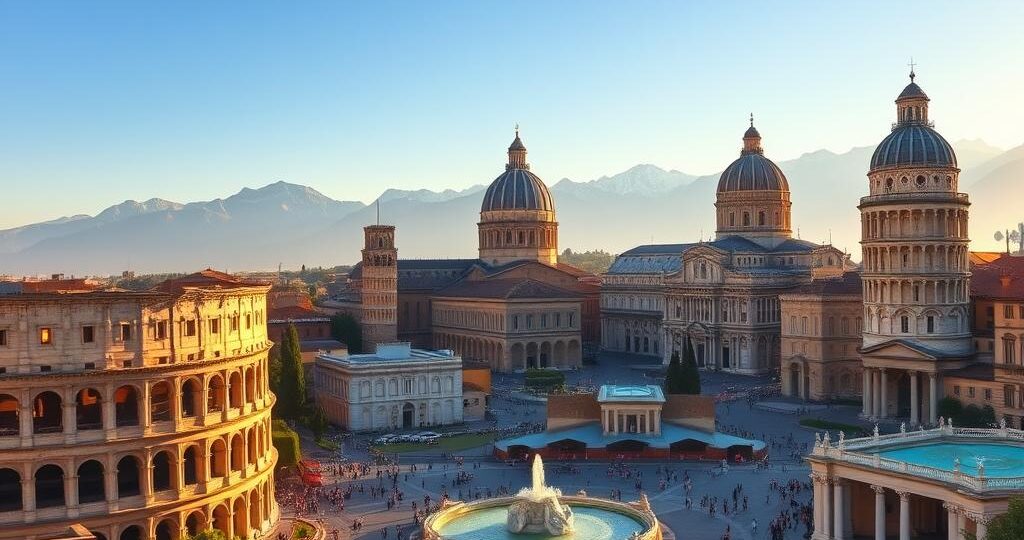

8 Most Famous Landmarks in Italy
Imagine walking through Rome’s ancient streets. You see iconic Italian buildings that have lasted for ages. Italy is full of history, art, and amazing architecture. It has some of the world’s most breathtaking landmarks.
But why do these landmarks draw so many tourists? What makes them so special?
Exploring famous Italian monuments opens a world of history, art, and culture. You’ll see the Colosseum and the Leaning Tower of Pisa. Each landmark has its own story.
In this article, we’ll show you the 8 Most Famous Landmarks in Italy. We’ll highlight the top sites that make Italy a favorite for travelers.
Famous Italian Landmarks
- Discover the most iconic Italian landmarks that attract millions of tourists
- Explore the rich history and art behind Italy’s famous monuments
- Learn about the must-see sites in Italy that make it a top travel destination
- Get an insider’s look at the cultural significance of Italy’s landmarks
- Plan your trip to Italy with our guide to the best Italian tourist attractions
Whether you love history, art, or unique travel experiences, 8 Most Famous Landmarks in Italy will amaze you.
Discovering Italy’s Most Iconic Monuments: Your Ultimate Guide
Italy is full of famous monuments with rich histories. These landmarks are more than just sights to see. They open doors to Italy’s past and culture.
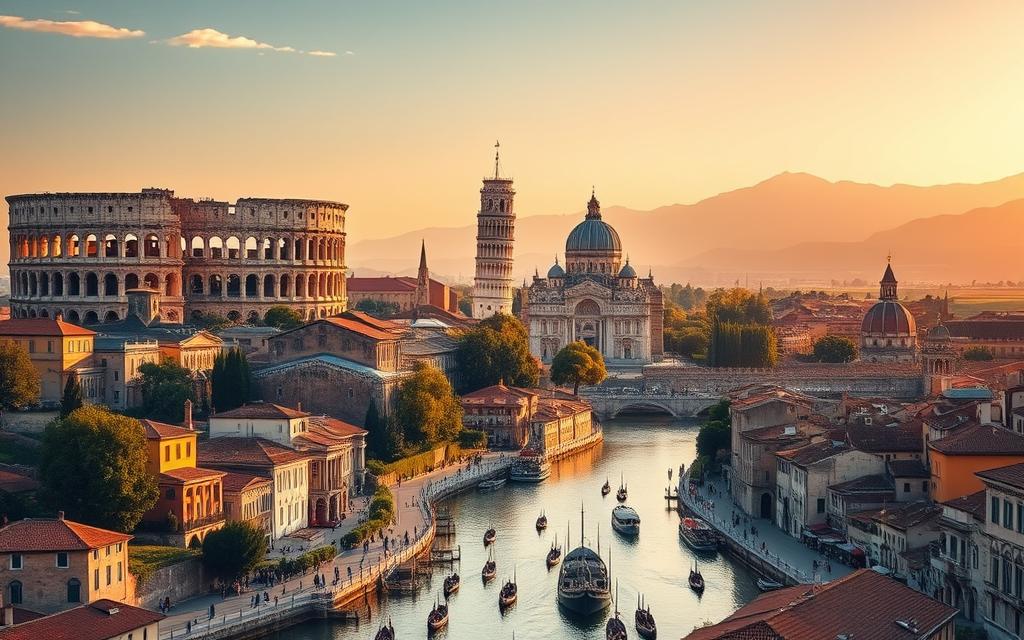
Why These Italian Landmarks Should Be On Your Bucket List
Italy’s landmarks show off its cultural heritage. You can see ancient Roman to Renaissance styles. Places like the Colosseum and Leaning Tower of Pisa take you back in time.
These sites are not just old buildings. They are part of Italy’s soul. Visiting them lets you see amazing architecture and learn about local history. From Vatican City’s St. Peter’s Basilica to Florence’s Duomo, each has its own story.
Planning Your Italian Landmark Adventure
Planning your trip to Italy’s landmarks is important. First, pick the places you want to see. Italy has many famous sites, so choose wisely. Think about getting an Italy Tourist Pass for easy access to attractions.
When to go is also key. Italy’s weather changes a lot from north to south. Summer is busy, so consider visiting in spring or fall for better weather and fewer people.
Best Times to Visit Italian Monuments
The best time to see Italian landmarks varies by region. Spring (April-May) and autumn (September-October) are usually best. The weather is nice, and there are fewer tourists than in summer.
| Region | Best Time to Visit | Weather |
|---|---|---|
| Northern Italy | Spring (April-May) and Autumn (September-October) | Mild temperatures, fewer tourists |
| Central Italy | Spring (April-May) and Autumn (September-October) | Pleasant weather, ideal for sightseeing |
| Southern Italy | Autumn (September-October) | Warm weather, fewer crowds |
Knowing the best times to visit helps make your trip better. It makes your journey through Italy’s landmarks unforgettable.
The Colosseum: Rome’s Ancient Amphitheater
The Colosseum is a symbol of Rome. It lets you dive into ancient Roman architecture and history. It’s a top Rome landmark that brings history to life.

This ancient amphitheater was built over 2,000 years ago. It’s an engineering marvel that amazes visitors. Walking through, you feel like you’re back in a time of gladiators and emperors.
The Colosseum shows off ancient Roman architecture. Its shape and seats were smart for crowds. This design was ahead of its time and has shaped buildings for ages. Check out Rome Official Tourism website.
| Feature | Description | Significance |
|---|---|---|
| Elliptical Design | Allowed for larger crowds and better acoustics | Innovative for crowd management |
| Tiered Seating | Provided optimal viewing angles for spectators | Enhanced spectator experience |
| Underground Tunnels | Facilitated the movement of gladiators and animals | Crucial for event logistics |
Visiting the Colosseum is like stepping into italian historical sites. It’s where history feels real. As a key rome tourist attraction, it’s a must-see.
In short, the Colosseum is more than a monument. It’s a way to see ancient Rome’s history and architecture. Exploring it, you’re not just seeing history; you’re living it.
Vatican City’s St. Peter’s Basilica: A Spiritual Marvel
St. Peter’s Basilica in Vatican City is famous. It draws millions each year. This place is a mix of history and beauty that amazes everyone.
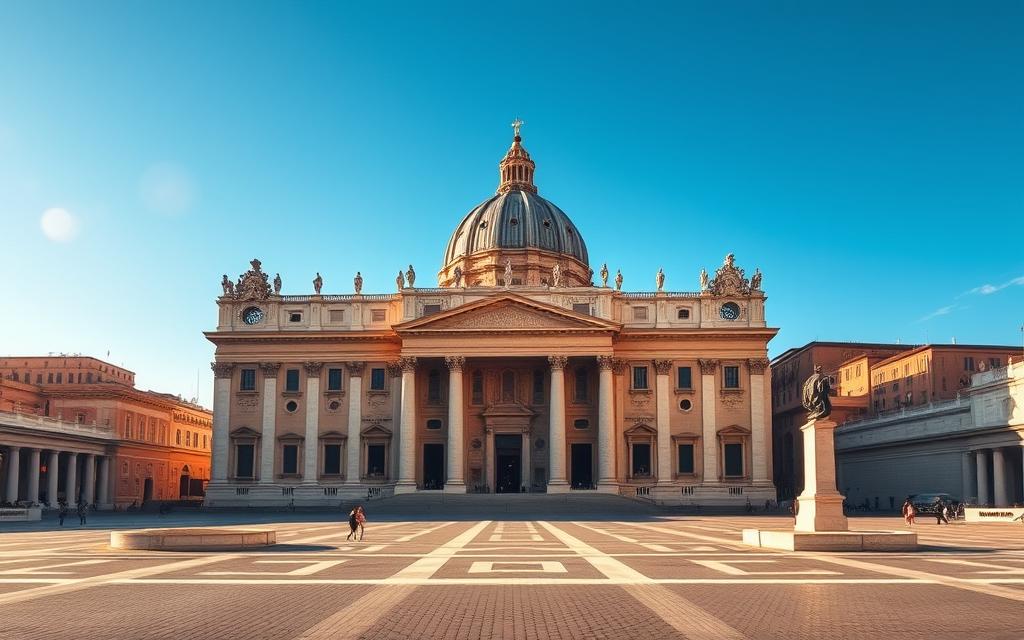
It’s the biggest Christian church. People come here to think and pray. The design is special, with styles from different times.
Exploring the Vatican Museums
The Vatican Museums are a must-see. They have amazing art and tell the story of art and Christianity. You’ll see works by famous artists like Michelangelo.
The Gallery of Maps is a highlight. It shows Italy’s maps from the 16th century. These maps tell us about the past.
Sistine Chapel Highlights
The Sistine Chapel is famous for its ceiling. Michelangelo’s “Creation of Adam” is there. It’s a masterpiece of Renaissance art.
The Sistine Chapel is also important spiritually. It’s where popes choose new ones. The chapel’s beauty is stunning.
Practical Visiting Tips
Plan your visit to St. Peter’s Basilica and the Vatican Museums. Here are some tips:
| Tips | Description | Benefit |
|---|---|---|
| Book Tickets in Advance | Purchase tickets online before your visit to avoid long wait times. | Save Time |
| Dress Modestly | Cover your shoulders and knees as a sign of respect for the religious sites. | Show Respect |
| Guided Tours | Consider hiring a guide or joining a group tour for deeper insights into the history and art. | Enhanced Understanding |
Follow these tips for a better visit. Whether you’re interested in the spiritual, art, or history, these places will impress you.
8 Most Famous Landmarks in Italy: From North to South
Italy is a country with amazing landmarks. From the Alps in the north to the Mediterranean coast in the south. You’ll see many famous monuments and buildings.
In the north, there’s the Leaning Tower of Pisa. It’s a wonder of the medieval world. This famous tower
Going south, you’ll see the Florence Cathedral. It’s a Renaissance gem. It’s a top spot for art, history, or architecture fans.
In Rome, there’s the Colosseum. It’s a symbol of ancient Roman engineering. It’s a key place to visit in Rome.
Other famous spots include the Venice Canals, Pompeii ruins, and the Amalfi Coast. Each shows a part of Italy’s rich history and culture.
Italy’s landmarks are not just beautiful. They tell the story of Italy’s past. From ancient times to today, there’s something for everyone.
Venice’s St. Mark’s Square and Basilica
When you enter St. Mark’s Square, you feel like you’re in a magical place. It’s one of the most famous Venice landmarks. The square is filled with beautiful buildings, including the amazing St. Mark’s Basilica.
St. Mark’s Basilica is a wonder with its golden domes and fancy facade. It’s a top Italian historical site. Walking through it, you’ll see its deep history and spiritual importance.
The Campanile and Doge’s Palace: Icons of Venetian Grandeur
The Campanile di San Marco is a tall bell tower next to the basilica. It gives you a great view of Venice. The Doge’s Palace is nearby, showing off Venice’s past rulers in Gothic style.
Walking around the square, you’ll see the details of these famous buildings. You’ll also feel the lively vibe of this Venice tourist attraction.
Best Photo Spots and Viewing Times in St. Mark’s Square
For the best photos, go to St. Mark’s Square in the early morning or late evening. The light is soft and beautiful. Make sure to take a photo from the Campanile di San Marco for a stunning view.
As the day goes on, the square gets busier with street performers and vendors. It’s fun to see. Don’t forget to explore the nearby alleys and enjoy the local culture. Your visit to this Venice landmark will be memorable.
The Leaning Tower of Pisa: Engineering Marvel
The Leaning Tower of Pisa is more than just a famous landmark. It’s an engineering marvel that has stood up to gravity for centuries. It’s a top attraction in Italy, drawing millions each year to see its tilt and history.
Built in the 12th century, the tower started to sink into the ground. This caused its famous lean. Its tilt makes it fascinating to architects, engineers, and tourists. The tower took decades to build, with many factors causing its lean.
Despite its problems, the Leaning Tower of Pisa shows the skill of medieval builders. It’s a big architectural achievement. Work to keep it stable has been going on, making sure it stays a key part of Italy’s culture.
Seeing the Leaning Tower of Pisa is a must in Italy. Climbing it gives you amazing views of the city. It’s part of the Pisa Cathedral complex, a UNESCO World Heritage Site.
The Leaning Tower of Pisa is more than a Pisa tourist attraction. It’s a sign of Italy’s rich history and building skills. It’s a special look into the past, perfect for anyone curious.
In conclusion, the Leaning Tower of Pisa is an engineering marvel that amazes people everywhere. Its tilt, history, and architecture make it a top landmark in Italy. It’s a must-see for anyone exploring Italy’s culture and buildings.
Florence’s Duomo: Renaissance Masterpiece
The Duomo is a must-see in Florence’s historic center. Its terracotta-tiled dome, designed by Filippo Brunelleschi, is a marvel. It’s a symbol of Florence’s engineering genius.
The Duomo is a top Florence landmark. It draws millions each year. The complex includes the Cathedral of Santa Maria del Fiore, Brunelleschi’s Dome, the Baptistery of St. John, and Giotto’s Campanile.
Climbing Brunelleschi’s Dome
Reaching the top of Brunelleschi’s Dome offers stunning views of Florence. It’s a key part of visiting this Italian Renaissance city. The climb has 463 steps, showing off Brunelleschi’s design.
Cathedral Complex Highlights
The Duomo complex is more than just a cathedral. It’s filled with architectural and artistic wonders. The Baptistery of St. John has famous bronze doors, like the “Gates of Paradise” by Lorenzo Ghiberti. Giotto’s Campanile is also a highlight, with its colorful marble and carvings.
| Attraction | Description | Opening Hours |
|---|---|---|
| Cathedral of Santa Maria del Fiore | The main cathedral, known for its facade and Brunelleschi’s Dome | Mon-Sat 10am-5pm, Sun 1:30-5pm |
| Brunelleschi’s Dome | Climb to the top for panoramic views of Florence | Mon-Sat 8:30am-7pm, Sun 1:00-7pm |
| Baptistery of St. John | Famous for its bronze doors, including the “Gates of Paradise” | Mon-Sat 8:15am-10:15am, Sun 8:15am-2:15pm |
| Giotto’s Campanile | A colorful, intricately carved bell tower | Mon-Sat 8:30am-7:30pm, Sun 1:00-7:30pm |
Photography and Visiting Tips
For great photos, visit early morning or late afternoon. This avoids harsh light. Remember to capture the details of the Baptistery and Giotto’s Campanile. Dress modestly, covering your shoulders and knees, as it’s a place of worship.
The Duomo is a key part of Florence’s culture. It’s a must-see for anyone visiting. Whether you love architecture, history, or just exploring, the Duomo will impress you.
Milan Cathedral: Gothic Splendor in the North
The Milan Cathedral is a must-see in Milan, Italy. It’s famous for its Gothic design, detailed stone carvings, and colorful stained glass windows.
When you see the cathedral, its grand size and detailed facade will amaze you. It’s not just a church but also a symbol of Milan’s history and culture.
Rooftop Experience
Visiting the Milan Cathedral’s rooftop is a highlight. The rooftop experience gives you amazing city views. You can see the cathedral’s carvings and statues up close.
The rooftop has the famous Madonnina, a golden statue of Milan. You can see the city while learning about this important landmark.
Interior Highlights and Tours
The cathedral’s inside is just as stunning as its outside. It has beautiful stained glass windows and detailed carvings. You’ll find art and history all around.
For a better visit, take a guided tour. These tours share the cathedral’s history and beauty. They help you understand its importance.
Conclusion: Embracing Italy’s Architectural Heritage
Exploring Italy, you find amazing landmarks that have lasted for ages. Rome’s old ruins and Florence’s palaces show Italy’s rich history. These famous spots draw visitors from everywhere.
It’s important to keep these landmarks safe for the future. Italy’s buildings are more than just sights. They show the country’s culture and creativity.
When you visit Italy, you get to see these famous spots up close. You might see Rome’s Colosseum or Venice’s St. Mark’s Square. You’ll feel Italy’s deep history and culture.
